Supplement pages cite research in two ways. One links to named papers you can open. The other says "clinical studies show" and moves on. This page does the first, including the parts of each paper that do not help.
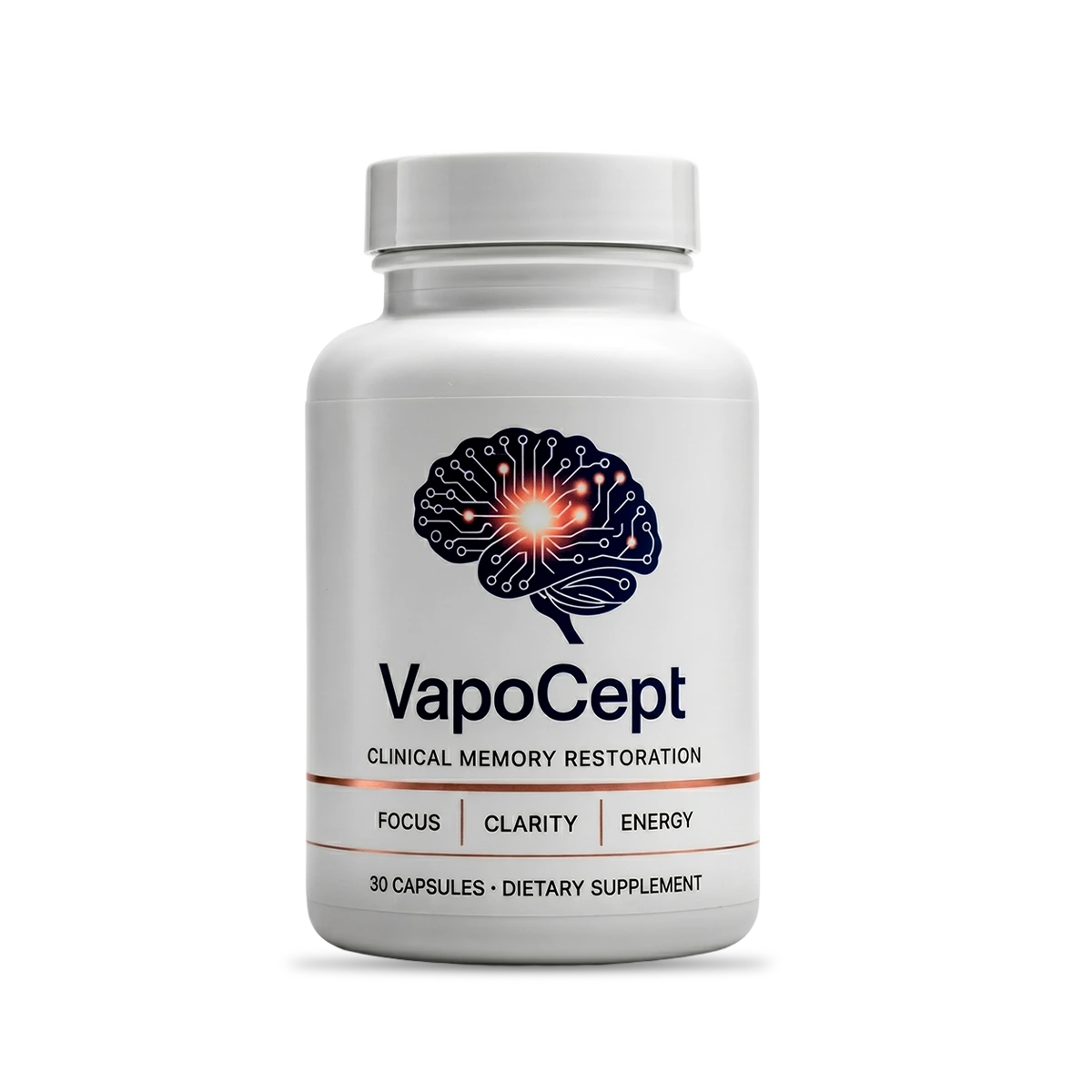
One framing note before the studies. Each trial below tested a single ingredient at a stated dose. VapoCept® is a multi-ingredient capsule, and no trial has been run on this finished product. That is the standard situation across the supplement category, and it means the honest claim is that the ingredients have research behind them — not that the capsule has been proven to reproduce those results.
Ginkgo Biloba — Memory for Appointments, 2011
Published in Phytomedicine. 188 healthy adults aged 45 to 56 took 240 mg of a standardized Ginkgo biloba extract daily for six weeks, against placebo.
- Free recall of appointments improved significantly for immediate recall (p = 0.038)
- The delayed recall result was stronger (p = 0.008)
- Recognition memory showed no advantage over placebo
What makes this one worth leading with is the outcome it chose. Not an abstract laboratory score — remembering appointments, which is a thing you actually do. And the participants were in their late forties and fifties, which is the age band this site is written for. PubMed 21802920
The limit: six weeks is short, and the absence of any recognition-memory effect indicates the benefit was narrow rather than general.
Lutein and Zeaxanthin — Twelve Months in Older Adults, 2017
Published in Frontiers in Aging Neuroscience (2017;9:254). 51 analyzable older adults, mean age 73.7, took 12 mg of combined lutein and zeaxanthin daily for twelve months.
- Complex attention improved significantly against placebo (p < 0.02)
- Cognitive flexibility also improved (p < 0.04)
A twelve-month trial in adults averaging seventy-three is the most directly relevant piece of research behind this formula for anyone over sixty-five. Marigold extract is the commercial source of both carotenoids. Read the paper
The limit: 51 analyzable participants is a small sample, and these were specific cognitive domains rather than overall function.
Curcumin — Eighteen Months, 2018
Published in the American Journal of Geriatric Psychiatry. 40 non-demented adults aged 51 to 84 took 90 mg of a bioavailability-enhanced curcumin twice daily for eighteen months.
The longest trial behind any ingredient in this formula, and the one whose caveat matters most: the preparation used was specifically engineered for absorption. Curcumin from ordinary turmeric is poorly absorbed, which is precisely why that engineering was necessary. Forty participants is also a small study. Read the paper
L-Theanine and Caffeine — Attention Switching, 2008
Published in Biological Psychology, a crossover design reporting improvements in attention-switching accuracy and self-reported alertness. Green tea extract supplies both L-theanine and EGCG. PubMed 18006208
The limit, stated plainly: this trial tested L-theanine together with caffeine at specific doses. A green tea extract inside a six-ingredient capsule is a different proposition. We include it because it is the relevant literature, not because it transfers cleanly.
What This Adds Up To
Four studies in four hundred-odd people in total, each testing one ingredient, none testing the combination. Two of them — the Ginkgo and lutein trials — were run in populations whose average age matches this site's readers, which is more than most cognitive supplement research can say. None of them establishes that a capsule containing these extracts produces the same outcomes.
That is the honest summary. If a competing page tells you a brain supplement is clinically proven, ask which trial, in whom, for how long, and whether it was run on the finished product. The answer is almost always that it was not.
How Long Before You Can Judge It
Eight to twelve consistent weeks. Six weeks was the shortest trial above; the other two ran twelve and eighteen months. Nothing here measured anything in the first few days, and any product promising a result in a week is making a claim its own ingredient research does not support.
That is also why the guarantee runs sixty days rather than thirty. Thirty days ends before a fair evaluation does.